Share This

Wednesday, 15 July 2026

Here's how to dine on durian wisely

 It’s hard to stop at just a few pieces of durian, but if you keep going, it can easily add up to another entire meal’s worth of calories. — LIM BENG TATT/The Star 

Two durian pieces fine, 15 equal to a meal, says dietitian

When durian season arrives, many Malaysians do not eat durian like fruit, they consume it like a feast.

If six apples were placed on the table, most people would not finish all six at one sitting.

The same goes for eight oranges or 10 bananas, for example.

But when it comes to durian, “just one more piece” can easily become 10, 15, or even 20 pieces (or seeds), before anyone realises it.

The issue is not that durian is “bad”. The real issue is portion size.

After 15 pieces

A recent personal observation using a continuous glucose monitor (CGM) showed how much portion size can matter.

A CGM is a small sensor that tracks glucose levels throughout the day.

Before eating the durian, the glucose reading was 4.9 mmol/L.

After consuming 15 pieces of durian, the reading rose to 8.0 mmol/L within an hour.

It peaked at 9.1 mmol/L after about 90 minutes before gradually coming down over the next few hours.

If blood glucose had only been checked before eating and two hours after eating, the result may not have looked alarming.

But the CGM showed the full journey: how high the glucose climbed, how long it stayed elevated, and how much work the body had to do to bring it back down.

This was only an individual observation, not a clinical study, and glucose response can differ from person to person.

However, it is a useful reminder that blood glucose response is not only about the type of food we eat, but also about the total portion we consume.

The glucose did not rise because of one piece; every extra piece contributed to the total glucose load the body had to manage.

Each piece of durian adds more carbohydrate for the body to process.

The body then releases insulin to help move glucose from the bloodstream into the muscles and liver to be used or stored as energy.

When calorie intake repeatedly exceeds what the body needs, the excess energy may contribute to weight gain over time.

Every additional piece means more glucose to manage, more insulin to release and more calories to handle.

Durian nutrients

An average piece of durian, weighing about 27g, contains approximately 45 kcal and 8g of carbohydrate.

At the same time, durian also provides dietary fibre, potassium, vitamins B and C, and beneficial antioxidants.

In other words, durian is still a fruit that provides good nutrients.

Like every other fruit, it has a recommended serving size.

Malaysians are generally encouraged to consume two servings of fruit daily, and durian can fit into this recommendation when eaten in the right portion.

For example, one serving of fruit looks like this:

  • One medium apple
  • One small banana
  • One medium orange
  • One slice of papaya
  • Two average-sized pieces of durian.

Two average-sized pieces of durian provide about 90 kcal and 16g of carbohydrates.

This can still be considered a moderate-sized snack portion.

That is why two average-sized pieces of durian can be considered one serving of fruit.

‘Just one more piece’
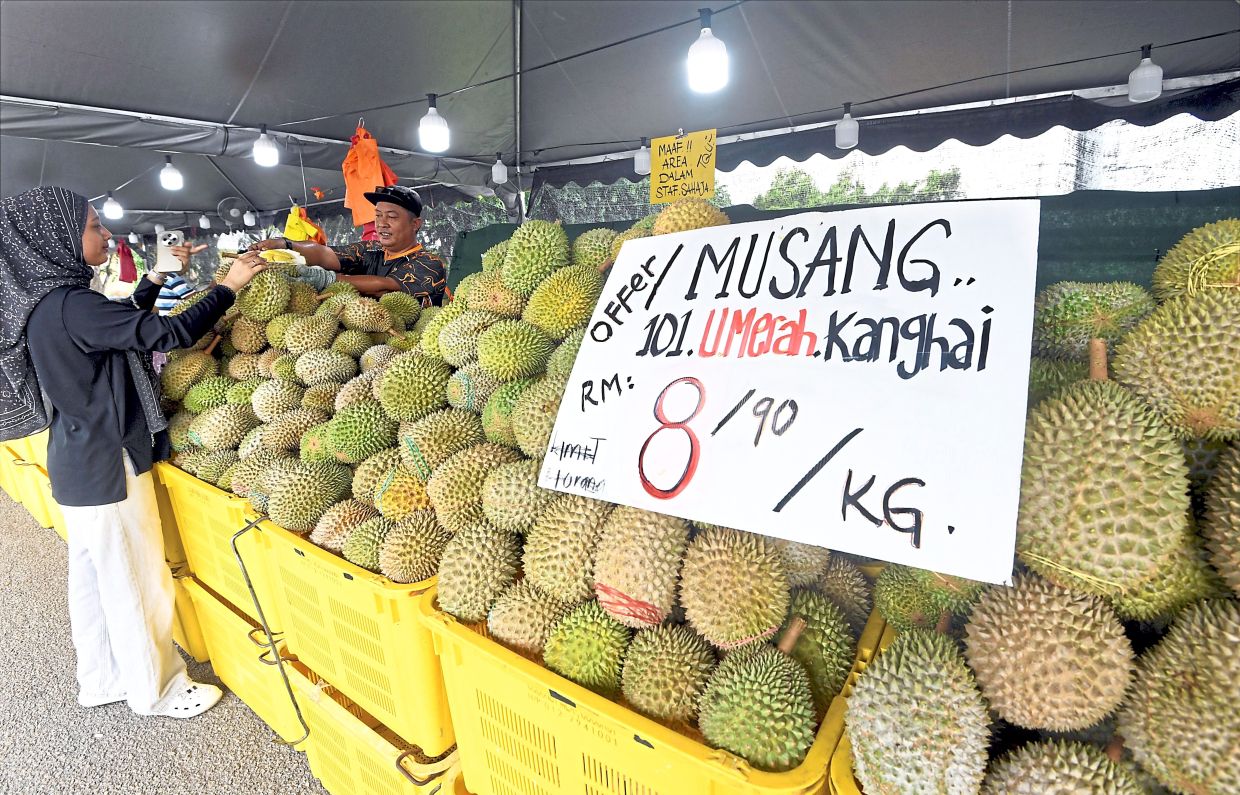
The current cheaper prices of durian makes it even harder to limit consumption for durian lovers. — AZHAR MAHFOF/The Star

The problem is not consuming the two pieces of durian; the problem is that durian is rarely limited to just two pieces.

Below are the amount of calories and carbohydrates for different amounts of durian:

  • One piece: 45 kcal and 8g
  • Five pieces: 225 kcal and 40g
  • 10 pieces: 450 kcal and 80g
  • 15 pieces: 675 kcal and 120g.

For comparison, a typical Malaysian lunch or dinner may provide around 500 kcal and 60g of carbohydrate, depending on food choices and portion size.

Now, imagine enjoying 10, or even 15, pieces of durian.

Without realising it, those “just one more piece” moments can quietly add another entire meal’s worth of calories and carbohydrates to your daily food intake.

Durian is generally considered a low to medium glycaemic index (GI) fruit.

Because of this, some people may assume it can be eaten freely.

ALSO READ: Understanding the glycaemic index

However, the glycaemic index of a food is only one part of the picture.

The bigger concern during durian season is glycaemic load, which refers to the total amount of carbohydrates consumed.

One or two pieces may be manageable for many people.

But 10 or 15 pieces create a much higher glucose load for the body to manage.

This is especially important for people living with diabetes, prediabetes, insulin resistance, weight concerns or a family history of diabetes.

Eat wisely

Still, Malaysians do not need to avoid durian completely.

Food should not be about fear; durian can still be enjoyed.

The key is to enjoy it with better awareness and a more mindful portion, especially when it is eaten after a full meal:

  • Keep to about two average- sized pieces as one fruit serving.
  • Avoid eating a large amount of durian immediately after a heavy rice-based meal.
  • Share with family or friends instead of finishing one box or fruit alone.
  • Eat slowly and enjoy the taste, instead of turning it into a challenge.

For people with diabetes, prediabetes or other health concerns, monitoring your blood glucose response and seeking personalised advice from a dietitian or healthcare professional can help support better food choices.

Durian season is something many Malaysians look forward to.

The goal is not to stop people from enjoying durian, but to help everyone enjoy it with better awareness.

Khoo Wei Jin is a dietitian at Alpro Pharmacy. For more information, email starhealth@thestar.com.my. The information provided is for educational and communication purposes only, and should not be considered as medical advice. The Star does not give any warranty on accuracy, completeness, functionality, usefulness or other assurances as to the content appearing in this article. The Star disclaims all responsibility for any losses, damage to property or personal injury suffered directly or indirectly from reliance on such information.

Related stories:


Two durian pieces fine, 15 equal to a meal, says dietitian 

Thursday, 9 July 2026

S’pore is world’s most expensive city for the rich

Island repub­lic gets the nod for the fourth year run­ning


 Premium destination: Pedestrians walk along the promenade near the financial business district of Singapore. The country ranked third most expensive for healthcare in 2025, but fell to 23rd in 2026. — AFP

SINGAPORE: Singapore has retained its position as the world’s most expensive city for the affluent for the fourth year running, reflecting the premium that global investors place on stability, a strong currency and a safe haven for capital.

As the wealthy assess their lifestyles and financial longevity, their focus has shifted from cost to value, seeking cities that offer the best mix of stability, quality of life, and balance between income and expenses, said the Julius Baer Global Wealth and Lifestyle Report 2026 released on July 7.

Tan Yee Kim, Julius Baer’s Singapore branch manager, said Singapore continues to stand out as a “natural choice” as the wealthy consider what assets to hold and where these assets should sit.

“It is valued for its stability, strong rule of law, and the sense of security it offers when planning for the long term. For many families, it forms part of a broader, deliberate allocation across regions, alongside Europe and the Americas,” he said.

ingapore’s rank at the top of the Swiss Bank’s Lifestyle Index reflects the high prices of residential property and cars – the two items that carry the heaviest weightings – as well as the strength of the Singapore dollar against the US dollar.

The Julius Baer Lifestyle Index tracks the price of a basket of 20 luxury goods and services – ranging from private school fees, healthcare and residential property to watches, jewellery and cars – across 25 cities globally. The data was gathered in two rounds between November 2025 and March 2026.

The republic continues to rank as the most expensive place in the world to buy a car and third, for residential property.

Singapore, along with Hong Kong, Shanghai, Sydney, Bangkok, Taipei, Tokyo, Jakarta, Mumbai and Manila took joint first position globally for the most expensive region to get an MBA. The report said the Asia Pacific has become the most expensive region to get an MBA.

But while Singapore ranked third most expensive for healthcare in 2025, it fell to 23rd in 2026; Sao Paulo, Zurich and London took the top three spots, respectively.

Zurich, long considered one of the world’s most expensive cities, climbed from its fifth spot in 2025 to displace London as the world’s second-most expensive city.

This was propelled by the Swiss franc’s appreciation against the US dollar. The currency’s strength is driven by Switzerland’s political and financial stability, which sees the franc acting as a store of value in unpredictable times, the report said.

Monaco entered the top three for the first time, pushing Hong Kong into fourth place, primarily due to a stronger euro elevating total costs in US-dollar terms, but also due to higher residential property prices.

Currencies were not the only force driving this year’s index, with rising raw material costs – particularly gold, which has more than doubled since 2024 – pushing up prices of luxury goods such as jewellery and watches.

Despite higher prices, demand from wealthy consumers remains resilient, allowing luxury brands to keep raising prices to maintain exclusivity and align global pricing with shifts in currencies, logistics and tariffs.

As wealth becomes more global and complex, ultra-rich families are placing greater emphasis on how and where their assets and structures are set up, particularly for tax, succession and governance purposes.

Mobility – both physical and financial – “is becoming a defining feature of wealth in 2026”, the report said. Not only do the wealthy choose where to live and spend, but they also allocate their assets across markets to benefit from currency trends and opportunities and hedge geopolitical risks.

The report said Asia-Pacific investors have stepped up portfolio adjustments amid geopolitical and macroeconomic uncertainty, with more than 70% increasing diversification over the past year.

Many have turned to precious metals as a hedge, while also expanding geographic exposure. Beyond gold, platinum has gained traction in China, and silver has seen renewed demand in India, both in physical markets and exchange-traded products.

Asia-Pacific investors are also showing higher risk tolerance and take a longer-term view than their global peers, with many increasing both investment and spending.

While some are taking a more disciplined approach by boosting investments and cutting spending, overall appetite remains firm. Equities continue to be the preferred asset class, with cash rising to second place ahead of real estate.

Asia Pacific and the Middle East saw the highest proportion of wealthy respondents reporting higher luxury spending in the past 12 months, with hotel suites, fine dining, business class flights and smart phones among the top five categories of increased spending for both regions.

Chua Jen-Ai, research analyst at Julius Baer’s equities research Asia, said high-tech artificial intelligence and semiconductor-driven growth, wealth flows and migration are fuelling fresh growth in cities like Singapore, Hong Kong, Shanghai and Sydney.

But in cities where traditional legacy industries, commodities and consumption are still the mainstay of economic activity, change has been more gradual.

Asia as a whole remains the fastest-growing region on Julius Baer’s economic projections, with gross domestic product growth of 4.5% in 2026 that is well above the global average of 2.9%, Chua said. — The Straits Times/ANN

The incredible star power rising from the East

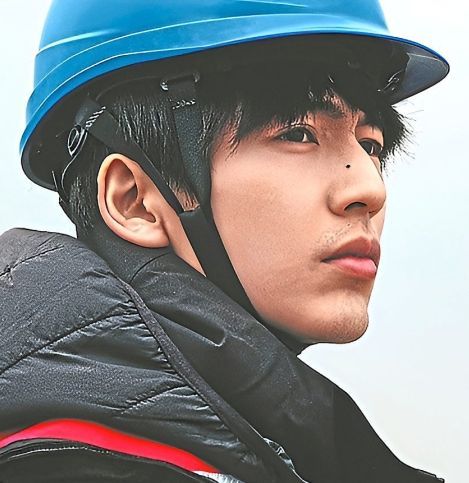
Zhang Linghe

 CAN a man be so handsome that millions of women, young and old, around the world have become obsessed with him?

That seems to be the case with Chinese actor Zhang Linghe, who has shot to international stardom with the costume drama, Pursuit of Jade. Just mention his name and the eyes of all my female friends will widen with giddy delight and enthusiastic nods and squeals of “He’s soooo handsome!” What follows will be breathless dissecting of his best scenes in the 40-episode drama that aired in March.

There are, of course, many extremely good-looking and popular actors from other East Asian countries like Japan - Yokohama Ryusei, Sakaguchi Kentaro, Yamashita Tomohisa - and from South Korea - Cha Eun Woo, Hyun Bin, Park Bo Gum - and lots more. But none has struck the popularity stakes globally like Zhang.

I, too, am quite smitten by him, but as a long-time consumer of Asian entertainment, I have also seen other actors becoming extremely popular after a hit drama only to fade as new dramas take over.

It's quite unusual that four months on, Zhang is still holding pole position, and it's thanks to the drama and him spreading westward.

That is what I find most interesting: how Western audiences, or rather non-Asian Western women, have become enamoured of Zhang, too. This is especially so when in the not-so-distant past, Asian male good looks, especially of K-pop idols, were ridiculed as effeminate with slanted eyes, too much plastic surgery and make-up.

Well, what do you know? Thanks to streaming sites like Netflix, audiences everywhere have become exposed to Asian entertainment like never before, and bam! the scales have fallen off their eyes.

By Asian, I am referring to East Asians, not people from the Indian subcontinent, because the latter’s good looks differ greatly with their larger, widely set eyes, thick eyebrows, prominent noses, and they are more hirsute; hence, they look a bit more like Caucasians.

Through the dramas and movies, Western audiences are not just exposed to handsome Asian men but also to how the stories are told, especially romance that focuses on character development that slowly builds up the relationship between the couple before their first kiss.

This is unlike Western romances that often have the couple getting physically intimate almost immediately.

And the Asian male protagonists are usually packaged like Prince Charming – tall, smart, educated, respectful of women and of course good looks with floppy hair and perfect skin.

Singapore aesthetic doctor Siew Tuck Wah explains why Zhang’s face has wowed so many. First are his large and well-proportioned, youthful and alert eyes. Next, his well-defined and structured jawline that signals masculinity. Thirdly, clear and blemish-free skin that signals health.

Dr Siew adds that Zhang’s is not overly rugged or soft, meaning his face has structure and refinement, a balance that makes him universally appealing. He suspects Zhang might have had treatments done to his skin but notes if so, it was done very naturally.

One more standout facial feature not raised by Dr Siew is Zhang's lips that are naturally rosy red. Dr Siew says Zhang looks best in period dramas because the hair is styled to show all his best features.

Well, I think Zhang is also very dishy in the modern drama, The Best Thing, in which he played a traditional medicine doctor, but it’s true he was sensational in Pursuit of Jade. My mak datin friend who rarely watches Chinese dramas only wants to watch him in his next historical drama, The Road to Glory, hoping to relive those good looks with old-fashioned hair and clothes that he carries off so well.

Zhang, who is 29, is admired not just for his beauty but his brains, too. He graduated from Nanjing Normal University with a degree in electrical engineering. He fronted a well-received documentary series, The Answer Is Earth, that is said to be a personal project because of his engineering background as it explores China's low-carbon transition and renewable energy sector.

While many Korean actors have long been popular, Chinese dudes are pretty much on par now with the likes of Zhang, Xiao Zhan, Wu Lei, Yang Yang, Chen Xingxu, Li Yunrui... I really could go on.

There are also many East Asian actresses who have become well known, and that’s evident from how both male and female actors and celebrities have become ambassadors for many brands.

And that is another cultural phenomenon that is worth noting. Until the turn of the century, we in Asia would usually see famous white people paid to promote all sorts of goods to us.

I am reminded of the 2003 movie, Lost in Translation, that starred Bill Murray as a washed-out American movie star who travels to Tokyo to promote Suntory whiskey. Even then, when most Asians were still in awe of the West’s hard and soft power, especially the United States, it struck me as ironic that the film was premised on a fading white actor being regarded as an effective salesman for an Asian product.

Then there was Brad Pitt's Heineken’s 2005 commercial showing him trying to buy beer while being chased by the paparazzi. It was a huge hit.

Twenty years on, Kim Taehyung, better known as V, a member of the South Korean superstar group BTS, is the global ambassador of the most iconic US drink, Coca-Cola, for its Zero campaign.

Back in 2021, Vogue Business, in an article, "Forget Hollywood. There’s a new global brand ambassador", stated that “As brands create content across more diverse ad channels, they’re moving away from traditional Hollywood stars in favour of multifaceted, digitally savvy entertainers such as BTS.”

In 1980, it was actress Brooke Shields who starred in the Calvin Klein Jeans campaign delivering the controversial tagline: "You want to know what comes between me and my Calvins? Nothing.”

In 2026, another BTS member, Jungkook, is the global ambassador. His limited-edition, Jung Kook for Calvin Klein (CKJK) capsule line, which features underwear and apparel, sold out in minutes across multiple global markets.

Indeed, Jungkook is widely acknowledged as an “elite brand multiplier” because his endorsement of any brand dramatically increases visibility, prestige and most importantly, sky-rocketing sales.

That’s why the highly prestigious watch brand, Hublot, chased him for 18 months before he agreed to sign on as its global ambassador.

Many other Asian stars, including from Thailand, have been appointed ambassadors of high fashion and retail labels.

Thai actor Metawin Opas‑iamkajorn represents Prada; Chinese actor Song Weilong (whose good looks and rosy lips are said to be on par with Zhang) is a Gucci and Omega ambassador; Korean actor Cha Eun-woo signed for Saint Laurent and jewellery brand Chaumet. The list goes on, including many top female actresses and artistes like Blackpink members, Yang Mi, Dilraba Dilmurat, Song Hye-kyo and IU.

No surprises that Zhang is ambassador for a slew of diverse brands too, including Bulgari, Puma, Lenovo, Motorola and, with his perfect face, Gucci Beauty and Lancome.

This is truly the Asian century in so many ways. The flow of influence is being reversed or is at last becoming a two-way traffic. We are no longer in thrall of the West that held sway post-colonialism.

I do not deny there was and still is much good coming from the West. But as Prof Amitav Acharya from American University, Washington, DC, writes on Chathamhouse.org, “Globalisation is not disappearing, but taking a new, eastern turn.”

What we are seeing is a definitive shift from Western dominance to a multipolar world. Experts have nicely described it as not merely a "decline of the West" but rather the rise of Asia's own confidence in its soft power as well as its economic and scientific capabilities.

And who's the poster boy for it? Zhang Linghe!

By   

Friday, 3 July 2026

Penang on track to deliver 220,000 homes by 2030


Sundarajoo (left) with Tah Wah Group managing director Datuk Seri Hong Yeam Wah during a visit to RMKu Foreshore Residence in George Town. The affordable housing project was developed by a subsidiary of the group. Sundarajoo (left) with Tah Wah Group managing director Datuk Seri Hong Yeam Wah during a visit to RMKu Foreshore Residence in George Town. The affordable housing project was developed by a subsidiary of the group. — CHAN BOON KAI/The Star

Exco: Over 60% of residents in state could benefit from Rumah MutiaraKu units

MORE housing developments are expected following imple­mentation of the Penang Mutiara Line LRT project, says state housing and environment committee chairman Datuk Seri S. Sundarajoo.

He said the project would help Penang deliver 220,000 Rumah MutiaraKu (RMKu) homes by 2030, with about 180,000 units already completed or under construction.

The 29.67km LRT line is expected to commence operations in Decem­ber 2031, based on the current schedule.

Sundarajoo said the 220,000-unit target would provide housing for about 1.1 million people, based on an average household size of five.

“Penang’s population is about 1.8 million, which means more than 60% of residents could be­­nefit from Rumah MutiaraKu homes across various price categories.

“With the LRT in place, we expect more housing developments to come on stream.

“I am confident we can achieve the target,” he said after a site visit to the RMKu Foreshore Residence project in Jalan CY Choy, George Town.

RMKu is Penang’s flagship affordable housing initiative, rebranded in January 2025 to replace the previous Rumah Mampu Milik (RMM) programme.

The scheme aims to increase home ownership among eligible Penang residents by offering price-­controlled units, zoned allocations, along with a clearer eligibility and delivery framework.

Under the scheme, price-controlled categories remain in place across all zones – Type A, B and C units, as well as the newly introduced Type D category.

Price ceilings range from RM42,000 for Type A units and RM72,500 for Type B units to between RM150,000 and RM300,000 for Type C1 to C3 units, depending on size and location.

The Type D category, with a price ceiling of RM400,000, is aimed at households earning up to RM15,000 a month.

These units cannot be resold on the open market.

On claims that affordable housing development was fo­cused only on the island, Sun­­da­­­­rajoo said the projects were being developed across both the island and mainland.

However, he said higher land prices on the island meant most projects there were concentrated in the Type B and C categories, particularly C3 units with a ceiling price of RM300,000 each.

He said affordable homes priced from RM72,500 were still available on the island, particularly in Teluk Kumbar and Balik Pulau.

Sun­­da­­­­rajoo said lower land costs on the mainland enabled developers to offer more affordable housing, including high-rise units priced between RM42,000 and RM250,000, while some landed homes in north and south Seberang Perai districts were still available below RM450,000.

He added that some developers helped first-time house buyers by absorbing the 10% down payment.

On the RMKu Foreshore Resi­dence, Sundarajoo said 482 affordable homes would soon be handed over to the buyers after issues delaying the project were resolved.

The development comprises 80 RMKu C2 units priced up to RM200,000 and 402 RMKu C3 units priced up to RM300,000.

Sundarajoo said 51 residents from the area had each been allocated a unit under the development.

“The value of the homes they are receiving surpasses the amount of rental they have been paying,” he said.

By LO TERN CHERN

Wednesday, 1 July 2026

M’sia in good position to adopt AI


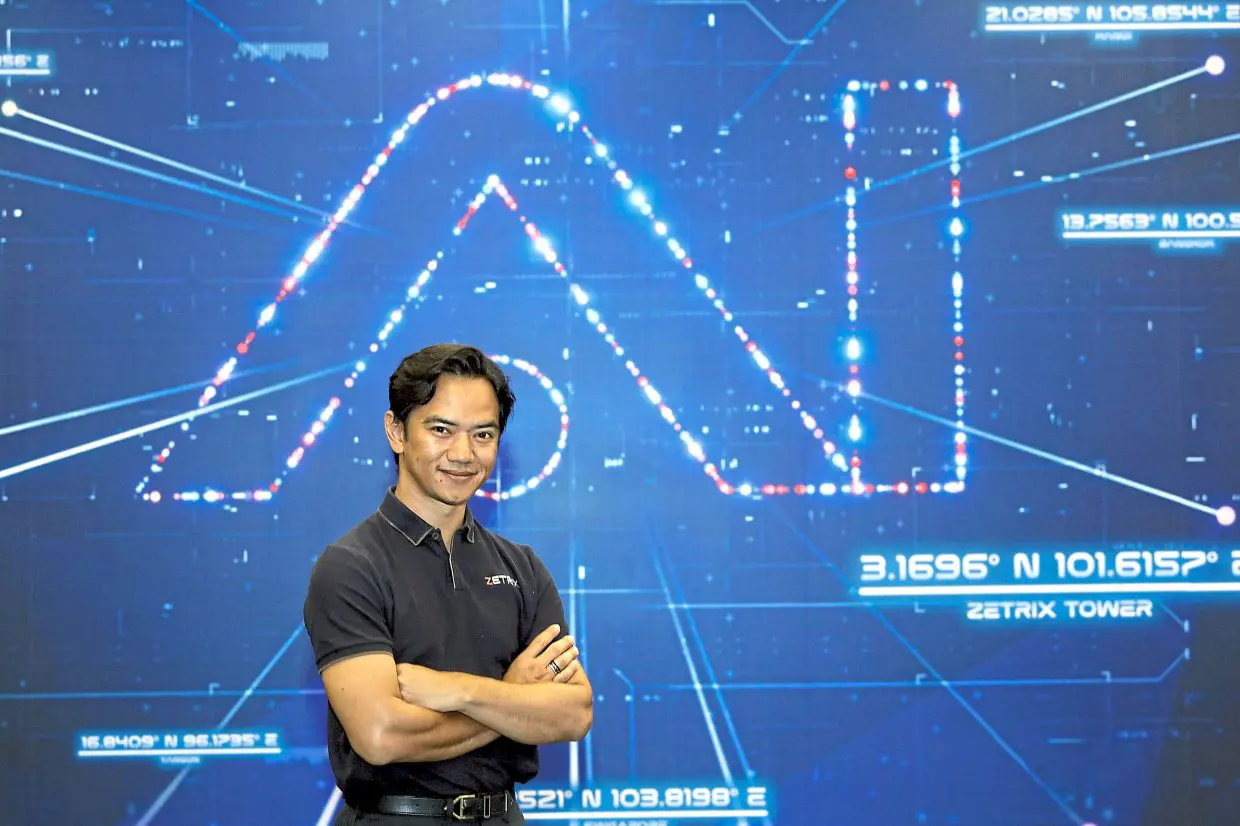
Zetrix co-founder Datuk Fadzli Shah Anuar

PETALING JAYA: With its own recent ambitious foray into the world of artificial intelligence (AI) and blockchain, Zetrix AI Bhd believes Malaysia is well-positioned to adopt and adapt to the fast-moving world of AI technology, and potentially reap economic benefits from the evolution.

Datuk Fadzli Shah Anuar, co-founder of Zetrix, the group's layer-1 blockchain platform, believes the country’s way forward lies not directly from its influx of its data centre (DC) pipeline, but more in how it enables its current workforce to improve productivity as the adoption of AI and high-level technology becomes more prevalent.

The issue is all the more relevant, given Malaysia’s seemingly continuous grapple with the issue of stagnating wages and increasingly higher cost of living.

In an exclusive interview, Fadzli acknowledged that while the government’s sanctioning of the DC influx represents its willingness to get on the tech bandwagon, the presence of DCs themselves will not translate into significant employment opportunities, especially given its highly skilled barrier of entry.

“In fact, while the adoption of AI and blockchain as a whole will mean jobs will be created, we see tasks will also be taken by non-humans, particularly a large portion of repetitive tasks that need to be done reliably and transparently,” he said.

Fadzli further explained why the group has forged several government-backed partnerships with Chinese entities, primarily focusing on AI innovation, blockchain interoperability, cross-border trade facilitation, digital identity and data trading.

With China being a significant economic and trade partner for Malaysia, he reiterated that Zetrix AI’s belief that much of China’s industrial and end-user behaviour will translate to some form of variant in this country, remarking: “Malaysia will follow similar growth and adoption cycles.”


Citing the recent trend of one-person companies or OPCs in China, with a single entrepreneur utilising multiple AI agents in delivering a service, Fadzli expects more tech-savvy youths adopting this business model.

He observed this as a form of job creation, commenting that Malaysia is well positioned to embrace this approach.

“This example will show that the current workforce can use AI and technology to become even more effective within its current roles, and perhaps we will see a tectonic shift of job roles.

“Businesses will move dynamically, a simple but huge departure from how things were previously, and we see Malaysia adopting such technology addictively,” he noted.

Nevertheless, Fadzli recognised the trust challenges that come with widespread AI and tech adoption, especially in maintaining service dependency and data privacy trust.

He believes there are three facets to building digital trust, namely, the reliability of the service rendered, data protection and the assurance that there will be no leakage of information, and the certainty that the parties dealing with each other know exactly who they are transacting with.

“We see that with the use of AI agents, not only can everything be done very accurately but also securely, because it will all be based on data packets. So for that, we believe that over the long term (AI), the agent-to-agent economy will be a commonplace occurrence,” said Fadzli.

As to how reality plays out this adoption, he is betting that it will change the way the public consume everyday services, from booking a car, ordering products online to even eCommerce, with AI agents securely matching orders to personal profiles.

Furthermore, he feels as applications become simpler for higher utilisation among the public, due to faster iteration cycles, there also needs to be user acceptance and awareness, and the necessity to marry digital identities (such as Malaysia’s MyDigital ID) with ever-growing technologies to ensure better data privacy and prevent scams.

With China and Asean being economies with somewhat different profiles, Fadzli conceded that there is no straightforward answer to this question.

He emphasised that China, due to the sheer size of its population and economy, can set standards, but it does not represent cluster economies which are interdependent as a trading bloc such as Asean.

“In our view, Asean is opportunistically a good showcase of how independent countries can work together and we are in a position to adopt certain standards that could be carried through an entire bloc, which can then be mirrored by the Gulf Cooperation Council or South American nations,” he explained.

On the differences between China and Asean notwithstanding, Fadzli believes that certain major economies (such as China or the United States) will lead in certain standards and cluster nation groups will then adopt these standards.

He says Asean state leaderships believe in digitalisation as a serious economic lever, as there is concerted effort to take this conversation seriously.

“Governance, however, is not keeping pace with the adoption or the onboarding of technology.

“What we can do to add value to what China is doing, using QR codes as an example, is to enable cross-border transactions and tech adoption more efficiently. Can governance keep up with such innovation?”

In addition, Fadzli said a more widespread usage of stablecoins such as the JMYR, a Malaysian ringgit-pegged stablecoin, would mean trades can be analysed with data more efficiently, while financing and remittances can be made instant.

JMYR is a fully backed, 1:1 digital token representing the Malaysian ringgit, designed for fast, programmable payments, settlements, remittances, and on/off-ramp functionality on Zetrix’s blockchain.

“It is essential to construct a stablecoin infrastructure, as this can create a transparent yet secure, efficient and competitive marketplace,” said Fadzli.